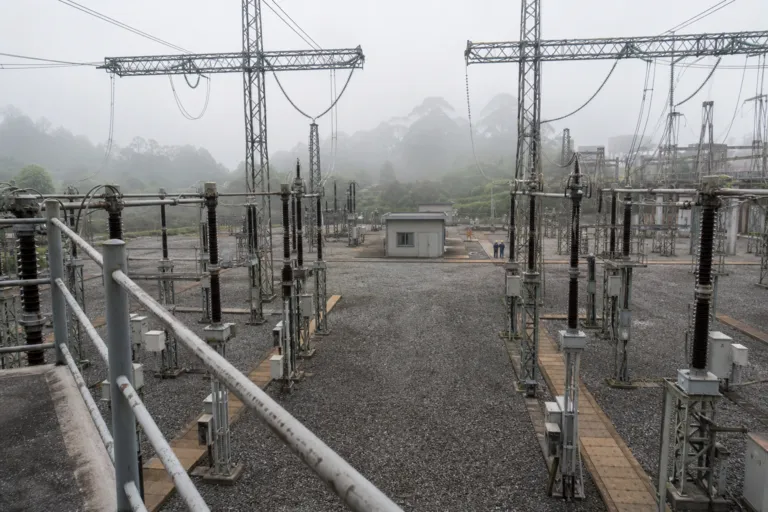
The Laos–Thailand–Malaysia–Singapore Power Integration Project (LTMS-PIP) has become a key proof point for regional electricity trade. Energy Ministers from Laos, Thailand, Malaysia, and Singapore issued a sixth Joint Statement on October 16 during the 43rd ASEAN Ministers on Energy Meeting (AMEM) hosted by Malaysia, affirming the project’s success. In that statement, they announced the doubling of electricity trading capacity to 200 MW. They also highlighted “multilateral and multidirectional cross-border power trade,” enabling electricity to flow from Laos to Singapore via Thailand and Malaysia, and from Malaysia to Singapore. This shift broadens the project’s practical reach by allowing more than one direction of supply within the same framework.
This expansion matters because LTMS-PIP is repeatedly framed as a pathfinder for the ASEAN Power Grid (APG). KPL describes it as the first multilateral power trade initiative involving four ASEAN nations and a cornerstone for the APG vision. Separate regional coverage and analysis also emphasize its demonstration value. One trade guide and a CSIS analysis both note the project has been operational since 2022 and shows the technical feasibility of cross-border power trade. At the same time, these sources stress its limits: it remains a controlled pilot and operates on fixed-volume contracts rather than a competitive, open electricity market. For buyers, that difference affects bankable offtake structures and how firm delivery schedules are managed.
Why Regional Grid Integration Is Accelerating Now
LTMS-PIP’s reach is expanding in a broader context of APG build-out targets and uneven interconnection progress. ASEAN currently has about 7.7 GW of interconnection capacity across nine of its 18 priority projects, according to a regional interconnection trade guide. Mordor Intelligence adds that the APG roadmap targets 17.6 GW of cross-border transfer capacity by 2040, up from 7.7 GW in mid-2023. Those figures underline a region moving from mostly bilateral links toward more coordinated trade corridors, especially in the Greater Mekong subregion, where surplus hydropower and contiguous grids can reduce integration costs. In this landscape, LTMS-PIP provides a working template for multilateral operational alignment.
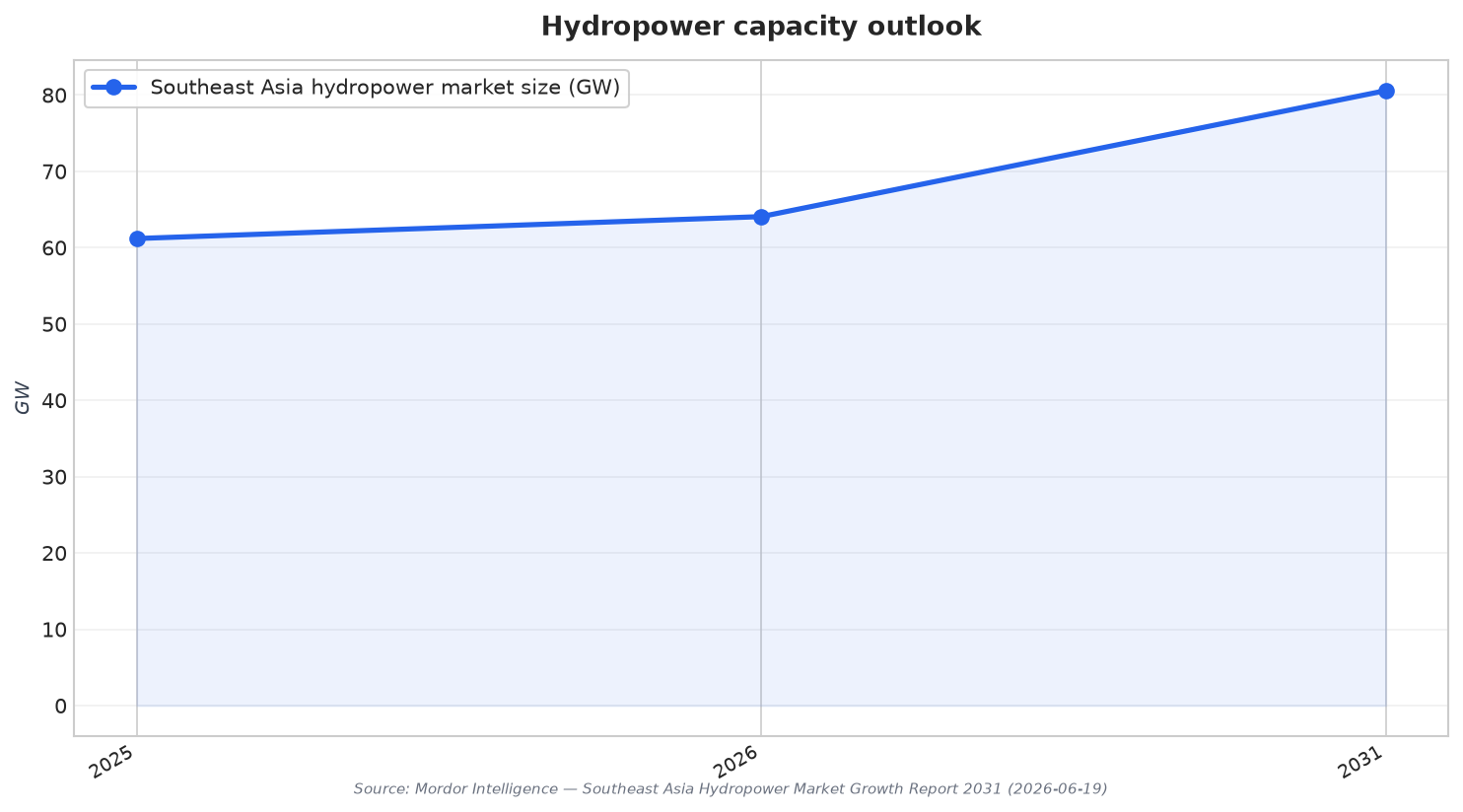
Hydropower and flexibility needs also sit behind growing interest in cross-border trade. Mordor Intelligence forecasts Southeast Asia hydropower market size growth from 61.20 GW in 2025 to 64.07 GW in 2026, reaching 80.58 GW by 2031, at a 4.68% CAGR over 2026–2031. The same source notes reservoir-based systems held a 53.25% share in 2025, while pumped storage is advancing at an 8.12% CAGR to 2031. It also points to Thailand battery energy storage systems commissioned in 2023 offering a two-hour duration, alongside feasibility studies for 500 MW pumped storage at Lam Ta Khlong targeting 8- to 12-hour discharge windows. These shifts reinforce why cross-border transfers can complement domestic balancing tools.
Even with progress, sources describe major remaining work to turn pilot trade into broader market functionality. The interconnection trade guide cites the International Energy Agency estimate that ASEAN countries will require more than $300 billion in electricity-grid investment between 2025 and 2040, and about $27 billion by 2040 for planned cross-border interconnections under the APG. That investment gap helps explain why a Laos Thailand Electricity Export Link is discussed as both a milestone and a work in progress: it proves power can move across multiple borders, yet it does not resolve congestion management, real-time balancing, or multi-country payment settlement. LTMS-PIP Working Group monitoring of technical, legal, and regulatory aspects is therefore central to the project’s next stage.
What changed in LTMS-PIP’s trading capacity?
How does the project expand its reach beyond a single export route?
Is LTMS-PIP an open electricity market?
What are the ASEAN Power Grid transfer-capacity figures tied to this expansion?
What does the Laos Thailand electricity export link demonstrate for the region?