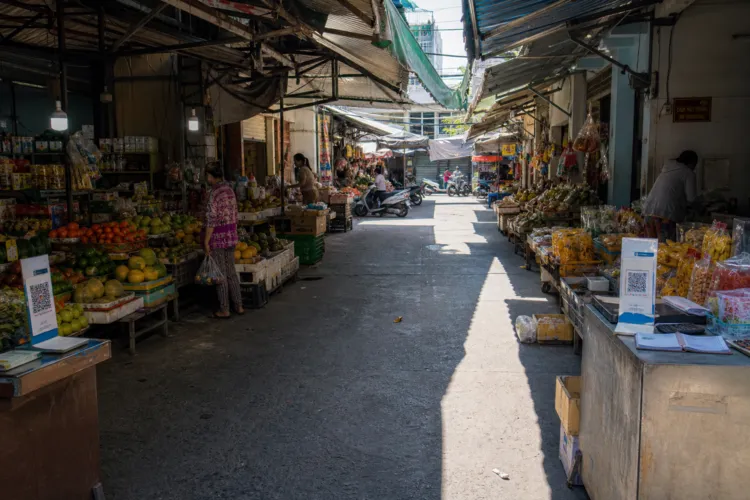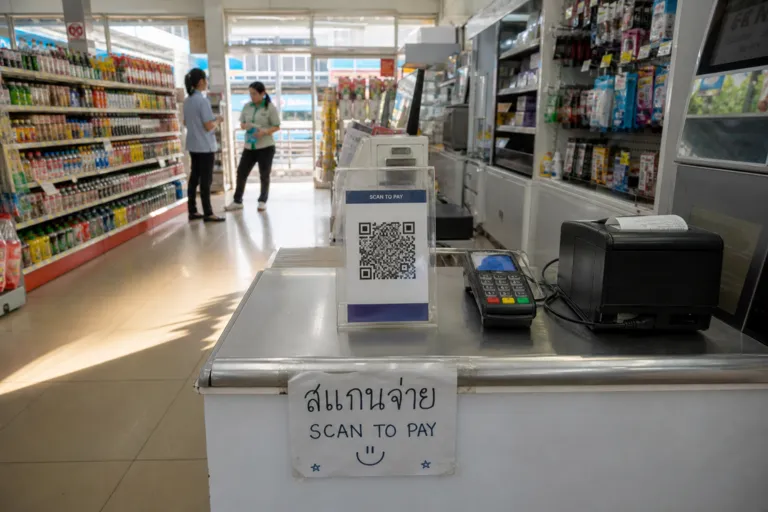
Thailand and Vietnam are pushing deeper cross-border QR payment interoperability to make travel spending simpler at the point of sale. Vietnam’s effort centers on extending VietQRGlobal so visitors can scan a local merchant code while paying through the mobile banking application they already use at home. This approach targets a practical pain point: outside major hotels and luxury retail hubs, international visitors can face limited digital payment options. The goal is a smoother, more predictable payment experience that supports tourism and day-to-day retail purchases, while reducing reliance on cash exchanges.
Vietnam’s QR strategy is also framed as a scaling challenge. One report describes a domestic network of over 2.5 million payment points, while only 154,000 of these—about 6 per cent—support VietQRGlobal. That gap matters for tourism, because it concentrates digital convenience in fewer places and leaves smaller merchants behind. Payment-sector research cited in coverage also suggests the demand-side is already strong: about 85 to 88 per cent of Asia-Pacific visitors are familiar with QR payments. Vietnam has been building outward links since 2021, including connections with China, Thailand, South Korea, Singapore, Cambodia, and Laos.
What the Thailand-Vietnam Link Means for Tourists and Small Merchants
For travelers, the benefit is straightforward: fewer situations where a purchase depends on finding an ATM or converting physical currency. For merchants, QR acceptance can be easier than deploying card-POS terminals, and direct system-to-system links can reduce intermediate currency conversion steps, potentially improving foreign exchange outcomes for users. Vietnam’s official data adds momentum to the case. NAPAS reported that in January–August 2026, transactions by tourists from Thailand, Laos, and Cambodia visiting Vietnam grew nearly eightfold in volume and sixfold in value compared with the same period in 2025. In the opposite direction, Vietnamese outbound transactions in those three markets increased fivefold in volume and fourfold in value.
Thailand’s experience provides regional context for how interoperability can shape spending. One report notes that Thailand’s central bank has linked PromptPay with payment systems across ASEAN and other major visitor markets, while promoting QR acceptance among tourism businesses. Vietnam is described as following the same ASEAN trajectory, using bilateral connections to improve payment reach beyond large venues. Separate NAPAS reporting adds that by August 2026, transactions by Chinese tourists scanning VietQRGlobal codes in Vietnam quadrupled in value compared to April, and that NAPAS had completed cross-border QR links with six regional countries, including two-way integration with Singapore and inbound connectivity for South Korean travelers.
In practice, the Thailand Vietnam QR Payment Linkage is part of a broader push to treat payments as travel infrastructure. Vietnam’s State Bank has implemented bilateral retail payment cooperation via QR code with Thailand, Laos, Cambodia, China, South Korea, and Singapore, and is implementing cooperation with additional countries. Industry voices also call 2026 “a pivotal year” for implementing bilateral payments with many major markets. As links widen, the biggest impact may be at the long tail of tourism commerce—local restaurants, small retailers, and household businesses—where a simple QR identifier can help capture more visitor spending without complex equipment.
What is changing in Thailand-Vietnam QR payment connectivity for tourists?
How large is the gap in VietQRGlobal acceptance inside Vietnam?
What do the latest figures show about Thai-related QR spending in Vietnam?
How does the Thailand Vietnam QR Payment Linkage affect small businesses?