Smart cities in ASEAN are gradually transforming how urban infrastructure is planned, monitored, and managed. Digital platforms, connected sensors, and data-driven planning tools can help cities improve resource efficiency, anticipate infrastructure needs, and support more informed decisions. However, adoption remains uneven, with many initiatives still operating at a pilot stage.
The Future ASEAN Sustainable Cities whitepaper by Eurogroup Consulting, developed in cooperation with the French Foreign Trade Advisors (CCE), identifies data-driven urban planning as a significant trend in Southeast Asia's sustainable development.
Singapore has established a regional benchmark through advanced digital planning systems, while cities including Jakarta, Kuala Lumpur, and Ho Chi Minh City are exploring technologies suited to their specific urban challenges.
Smart Cities in ASEAN: From Ambition to Practical Implementation
Planning authorities must coordinate transportation networks, utilities, housing, public services, and environmental protection, often within densely developed urban environments. Smart-city technologies seek to improve these processes by providing more timely and detailed information.
However, the region is not advancing uniformly. The Eurogroup Consulting whitepaper describes Southeast Asia as being at an early-to-intermediate stage in using data for urban planning. Singapore is identified as a leading market, while Jakarta and Kuala Lumpur have developed notable initiatives. Other cities continue to face limitations involving technology access, funding, and institutional capabilities.
The ASEAN Smart Cities Network, established in 2018, connected 30 cities in the whitepaper's research snapshot to encourage cooperation and the exchange of sustainable urban solutions. Nevertheless, participation in regional initiatives does not automatically translate into advanced digital infrastructure.
How Is Urban Data Changing City Management?
The value of information depends not simply on collecting large volumes of data, but on translating it into operational decisions. Urban authorities may use information about population distribution, land use, and environmental exposure to guide future development.
The Asian Development Bank (ADB) outlines seven principles for sustainable urban planning in the whitepaper. Among these are integrated multisectoral projects, climate resilience and adaptation, and data-driven planning.
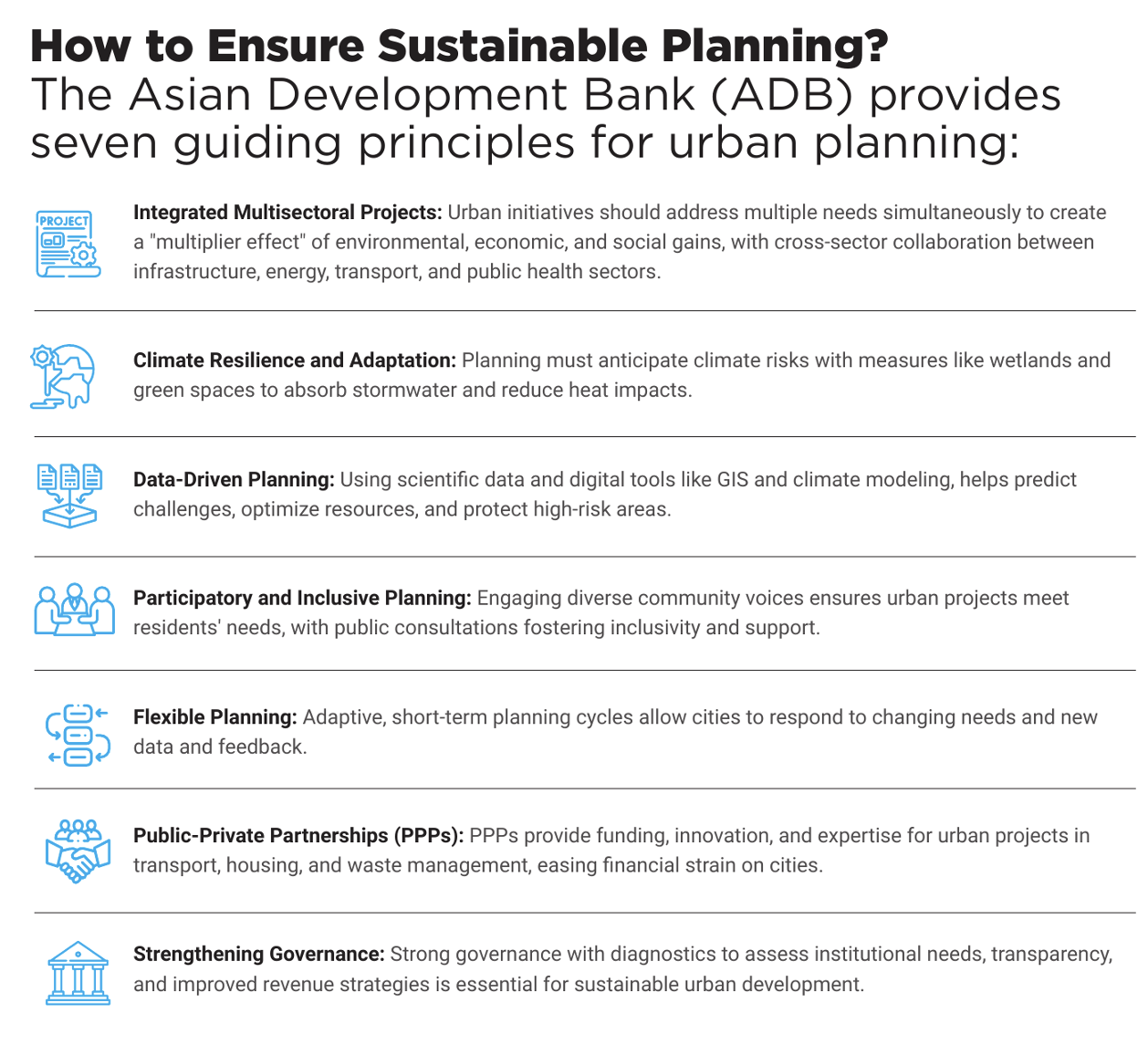
Figure 1: ADB's Seven Guiding Principles for Urban Planning. Source: Future ASEAN Sustainable Cities, Eurogroup Consulting (p. 43).
These principles demonstrate that technology is most valuable when incorporated into broader planning objectives rather than treated as a separate initiative.
Several applications illustrate the importance of data integration. Energy-management systems can support more efficient electricity consumption. Environmental monitoring can contribute to disaster preparedness, while resource-management platforms can help identify operational inefficiencies.
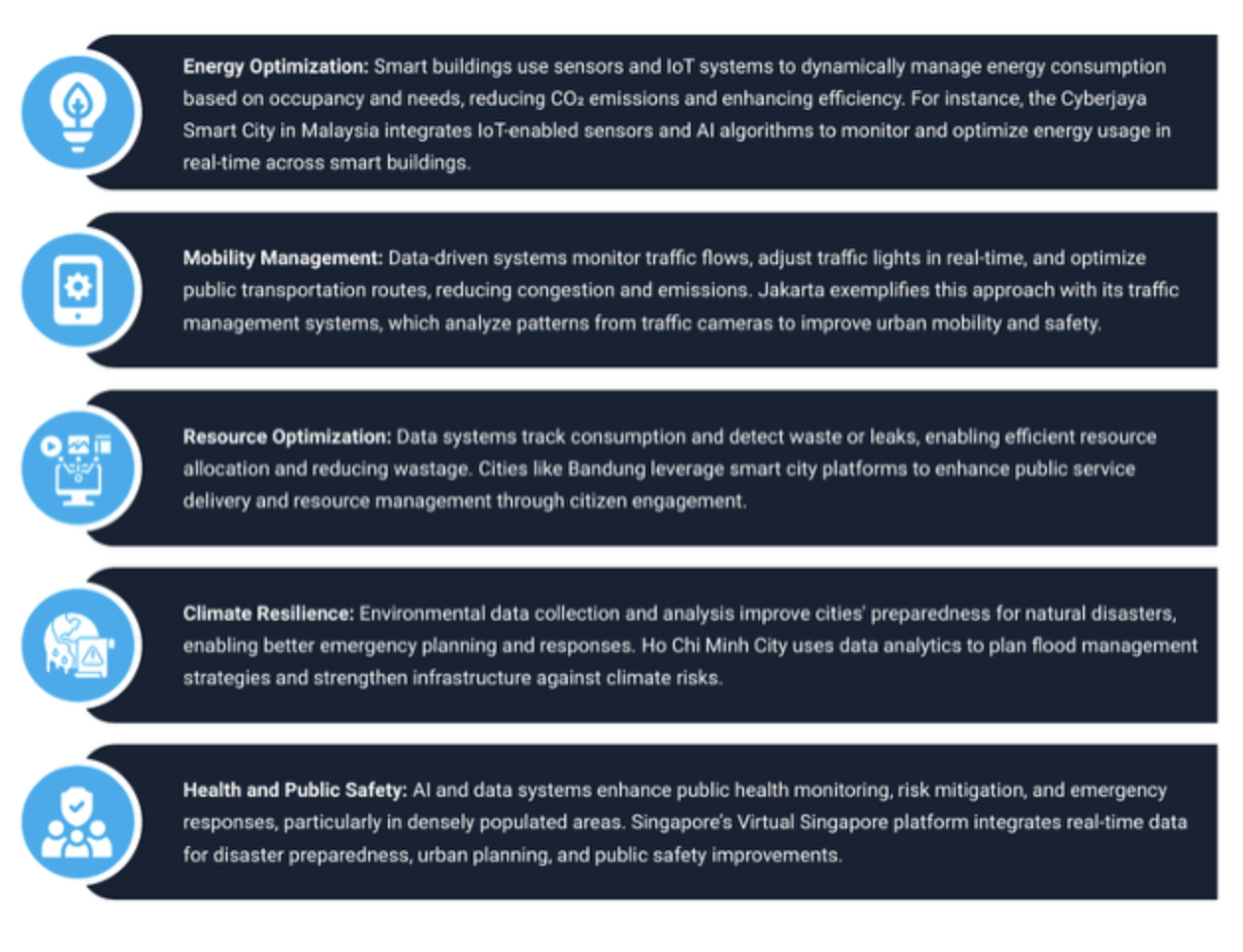
Figure 2: Applications of Data-Driven Planning and Smart City Management. Source: Future ASEAN Sustainable Cities, Eurogroup Consulting (p. 44).
Read more about the region's digital expansion in ASEAN Digital Economy Races Toward USD 1 Trillion. Although digital commerce and urban infrastructure are different markets, both depend on connectivity, technology capabilities, and effective data management.
Digital Twins: A New Dimension of Urban Planning
A digital twin is a virtual representation of a physical asset or environment that can incorporate information about its actual condition and performance. At the city level, digital twins can help planners analyze infrastructure, simulate development scenarios, and examine how urban systems interact.
The Future ASEAN Sustainable Cities whitepaper highlights Virtual Singapore, which uses three-dimensional modeling and data integration to support planning and urban management.
However, digital twins require more than detailed visual models. Their value depends on the availability of accurate data, appropriate analytical tools, and the capacity of institutions to apply the information.
As Henri Nejade, Chairman of the Singapore Chemical Industry Council (SCIC), emphasizes in the whitepaper:
"Quality data, rigorously collected, is crucial for developing applicable and auditable standards."
The whitepaper also discusses an ASEAN digital-twin pilot network involving cities such as Jakarta and Cauayan City in the Philippines. These initiatives demonstrate interest in collaborative experimentation, but should not be interpreted as evidence that advanced digital twins are already deployed comprehensively across ASEAN.
Building New Cities or Upgrading Existing Ones?
New urban developments can incorporate digital infrastructure, environmental considerations, and integrated transport systems from the early design stages. However, large greenfield projects can involve substantial financing requirements, long implementation periods, and complex social and environmental considerations.
Indonesia's Nusantara provides an example of this approach. The whitepaper describes the planned capital's ambition to develop a sustainable urban environment across approximately 2,500 square kilometers, with a target population of two million residents by 2045.
Existing cities face a different challenge. They must introduce new technologies while maintaining services, protecting established communities, and working around infrastructure developed over many decades.
The Future ASEAN Sustainable Cities whitepaper examines these different development approaches and their implications for sustainable urban planning.
Scaling Smart Cities: The Opportunity Beyond Pilot Projects
The whitepaper identifies limited data infrastructure, technical expertise, financial resources, and institutional coordination as important barriers. Public agencies may operate separate information systems, making data integration difficult.
Several considerations are particularly important:
- Operational relevance: Technologies should address clearly identified urban challenges.
- Data compatibility: Platforms must integrate with existing information systems.
- Institutional readiness: Government agencies need the capabilities to maintain and use deployed technologies.
- Commercial sustainability: Projects require realistic financing and operating models.
- Scalability: Initial implementations should demonstrate how solutions can expand beyond pilot environments.
The region's smart-city opportunity is not simply about digitizing public services. It involves improving how cities make decisions, coordinate infrastructure, and respond to changing urban needs.
Frequently Asked Questions
What are smart cities in ASEAN?
Smart cities use digital technologies, data platforms, and connected infrastructure to improve urban planning and service delivery. In Southeast Asia, applications include energy management, infrastructure monitoring, resource optimization, and disaster preparedness. Development levels vary widely, with some cities operating advanced platforms while others remain at early implementation stages.
What is the ASEAN Smart Cities Network?
The ASEAN Smart Cities Network is a regional cooperation initiative launched in 2018 to promote sustainable urban development through technology, knowledge sharing, and partnerships. The Eurogroup Consulting whitepaper describes a network of 30 cities in its research snapshot.
What is a digital twin of a city?
A city digital twin is a virtual model of an urban environment that can incorporate physical infrastructure information and operational data. Virtual Singapore is a prominent example highlighted in the whitepaper.
Which ASEAN cities are advancing smart-city technologies?
The whitepaper identifies Singapore as a regional benchmark in data-driven urban planning, with Jakarta and Kuala Lumpur also pursuing notable initiatives. Progress varies because of differences in funding, infrastructure, technical capabilities, and institutional coordination.
Explore ASEAN's Data-Driven Urban Future
Download the Full Future ASEAN Sustainable Cities Whitepaper
Explore Eurogroup Consulting's comprehensive research, developed in cooperation with the French Foreign Trade Advisors (CCE), including smart-city trends, digital planning, urban investment requirements, and strategic considerations for businesses operating across ASEAN.