As global chip supply chains restructure, Singapore is leaning harder into research and coordination to keep its semiconductor ecosystem competitive. Industry players have committed more than S$500 million (US$390 million) to R&D projects in Singapore over five years from 2026, according to A*STAR. That level is higher than the more than S$400 million spent between 2020 and 2025. The focus is on sharpening an edge in advanced chip technologies, in a capital-intensive industry where the pace of change and the cost of staying relevant are rising.
Singapore’s role in the supply chain is already broad. It accounts for about one in every 10 chips made globally. It also produces roughly 20% of the global semiconductor equipment supply, giving it an influence point beyond manufacturing alone. A separate industry report estimates Singapore’s semiconductor market was valued at USD 70B in 2025 and projects it could reach USD 118B by 2033, with demand linked to AI chips and advanced manufacturing. This mix of scale and capability is why Singapore is positioning research as a lever for staying central even as trade restrictions and fragmentation risks grow.
Where the Next Performance Gains Are Expected
The research push is shaped by a simple reality: pushing conventional scaling has become increasingly challenging and expensive. CNA reports that chip features are now just dozens of atoms thick, where quantum effects become more significant, and further progress is harder. Industry voices cited by CNA argue the “next battle” is likely to be fought on advanced packaging, heterogeneous integration, and chiplets, where more value-add opportunities may emerge. Research also extends to photonics, which uses light instead of electrical signals to move data more efficiently for AI systems, and to chips designed for the enormous power requirements of data centres.
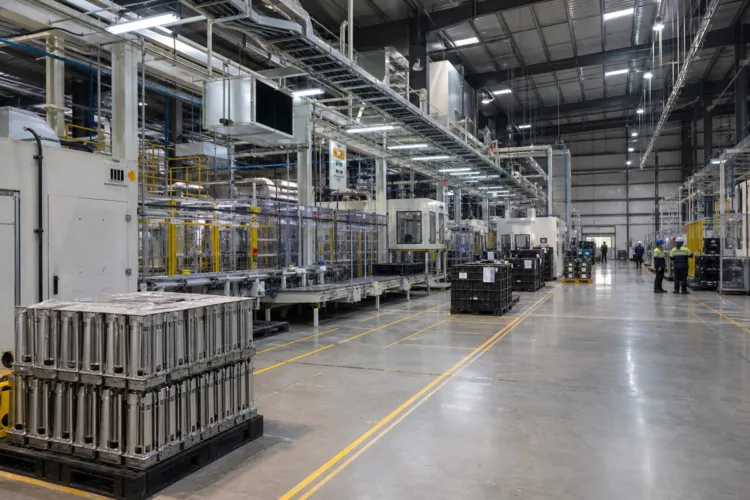
Singapore is also trying to keep more of the value chain anchored locally. One report notes that Singapore hosts front-end fabrication, back-end assembly and testing, equipment manufacturing, and R&D within one region. It also cites EDB reporting that nine of the top 15 global semiconductor companies are based in Singapore, supporting a concentrated cluster. Government-backed R&D organizations such as A*STAR are described as supporting cutting-edge work in advanced packaging, photonics, and AI chips, which can help minimize supply chain fragmentation and enhance value retention within local manufacturing.
Cost and volatility remain part of the equation, even as Singapore invests to stay essential. Manufacturing costs are estimated to be approximately 15% higher than in Malaysia, which can pressure cost-sensitive segments. The industry is cyclical, with periodic inventory corrections and demand volatility. At the same time, a separate analysis states the Singaporean government committed approximately S$18 billion (US$13.6 billion) from 2021 to 2025 to promote research, development, and innovation within the semiconductor sector. Together with the new post-2026 industry commitments, this underlines how Singapore Semiconductor R&D is being used to adapt to supply chain shifts rather than wait them out.
How much new semiconductor R&D funding has been committed in Singapore from 2026?
How does the new R&D commitment compare with spending from 2020 to 2025?
What parts of the chip value chain are present in Singapore?
What areas are highlighted for Singapore Semiconductor R&D as performance scaling gets harder?
What cost challenge is noted for Singapore’s semiconductor manufacturing base?