Rising cyber threats are turning cybersecurity into a budget priority across Southeast Asia, especially as digital governance, smart-city programs, and national cloud platforms expand the attack surface. In ASEAN, the cyber security market is expected to reach USD 5.51 billion in 2025 and grow at a CAGR of 17.24% to reach USD 12.20 billion by 2030. Public-sector momentum is a visible contributor. A separate Asia-Pacific government and public-sector cybersecurity view estimates USD 11.46 billion in 2025 and anticipates USD 25.42 billion by 2033, growing at a 10.47% CAGR from 2026 to 2033. That report also notes Southeast Asia invested more in cybersecurity due to the expansion of cities and digital governance initiatives, alongside increased demand for endpoint security as work patterns changed.
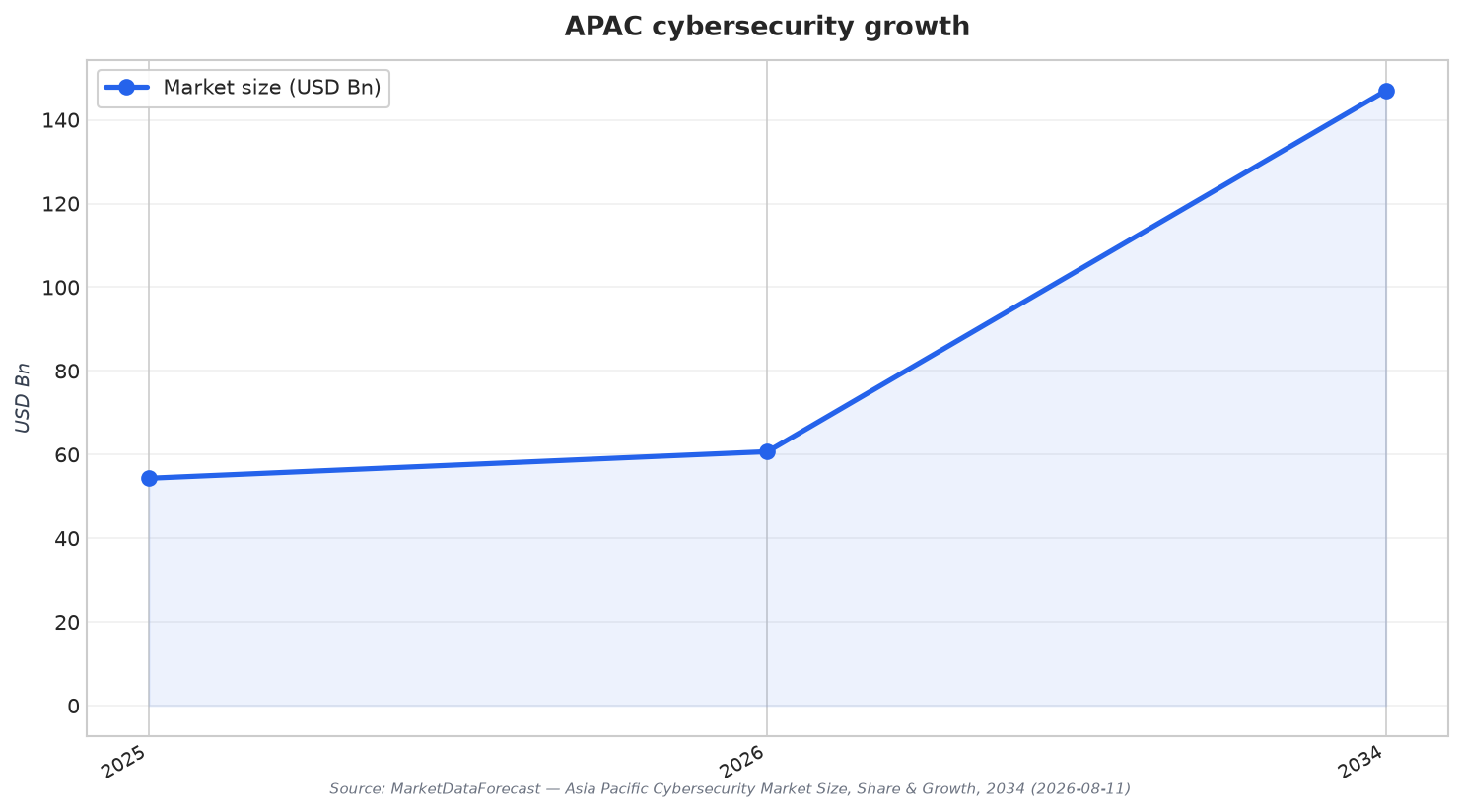
Region-wide Asia-Pacific benchmarks help explain why local plans are accelerating. One Asia-Pacific cybersecurity market estimate values the region at USD 54.34 billion in 2025, estimates USD 60.69 billion in 2026, and projects USD 146.98 billion by 2034, with a CAGR of 11.69% from 2026 to 2034. Another Asia-Pacific forecast projects growth from USD 74.22 billion in 2025 and USD 83.91 billion in 2026 to USD 158.38 billion by 2031, registering a CAGR of 13.55% between 2026 and 2031. These figures are Asia-Pacific totals, not Southeast Asia alone, but they set the context for why procurement cycles in ASEAN are tightening around compliance, visibility, and response capabilities as digitization deepens.
What’s Actually Driving Spending in ASEAN and Southeast Asia
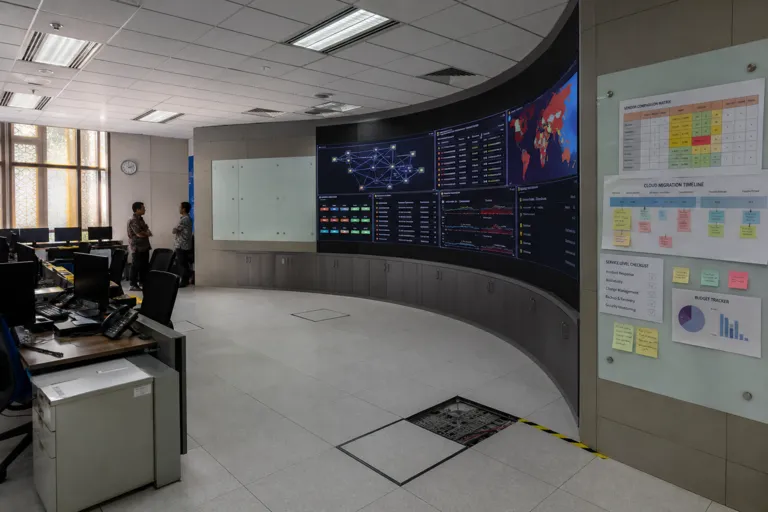
Buyers are prioritizing capabilities that match modern infrastructure. The ASEAN market narrative highlights smart-city grids in Bangkok and Ho Chi Minh City as amplifying demand for IoT-centric threat modeling. It also points to Malaysia’s MyCERT 2.0 and Singapore’s national SOC roadmap, which collectively bring more than USD 150 million in new detection and response spending to market before 2026. In government, the Asia-Pacific public-sector report says agencies shifted from reacting to threats to predicting them, and it describes a rise in ransomware attacks on public infrastructure after 2023 that forced greater focus on tools that can detect threats in time. As more services moved online, it also notes growing need for authentication systems and expansion of identity and access management solutions.
Cloud adoption and services models are also shaping how budgets get allocated. In ASEAN, cloud-security spend is described as continuing to record a 20.46% CAGR as DevSecOps, container security, and CNAPP platforms become default procurement, while professional and managed services rise at a 19.28% CAGR as enterprises confront skills shortages and audit pressure that demands continuous monitoring. At the broader Asia-Pacific level, solutions held 57.04% share in 2025, while services are forecast to grow at a 14.63% CAGR through 2031. On-premises architectures commanded 61.88% of Asia-Pacific share in 2025, yet cloud deployments are advancing at a 14.75% CAGR through 2031, showing why hybrid approaches persist while cloud security grows faster.
Security spending is also being pulled by regulation, industry exposure, and the practical limits of in-house teams. One Asia-Pacific analysis highlights data-sovereignty mandates in countries including Indonesia and Vietnam, framing them as drivers for locally hosted security and domestic cloud regions. Industry segmentation reinforces where risk and compliance budgets cluster: in Asia-Pacific, banking, financial services, and insurance led with 24.62% of market size in 2025, while large enterprises captured 66.69% share that year, and small and medium enterprises are projected to register a 14.82% CAGR to 2031. Taken together, the Southeast Asia cybersecurity market 2026 discussion is less about a single tool and more about an operating model: identity-first controls, continuous detection, and managed expertise that can keep pace with expanding digital services and evolving threats.
What is the ASEAN cybersecurity market growth outlook through 2030?
What new public-sector spending signals are highlighted in Southeast Asia before 2026?
How are cloud security and services trends influencing buying in ASEAN?
For the Southeast Asia cybersecurity market in 2026, what priorities stand out in government?