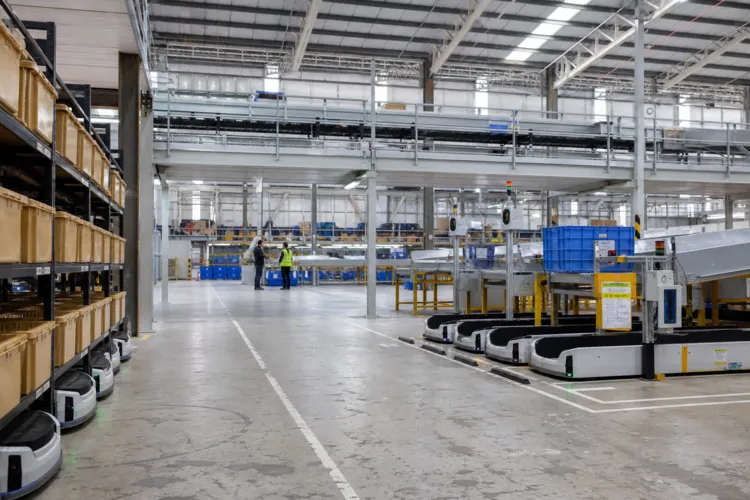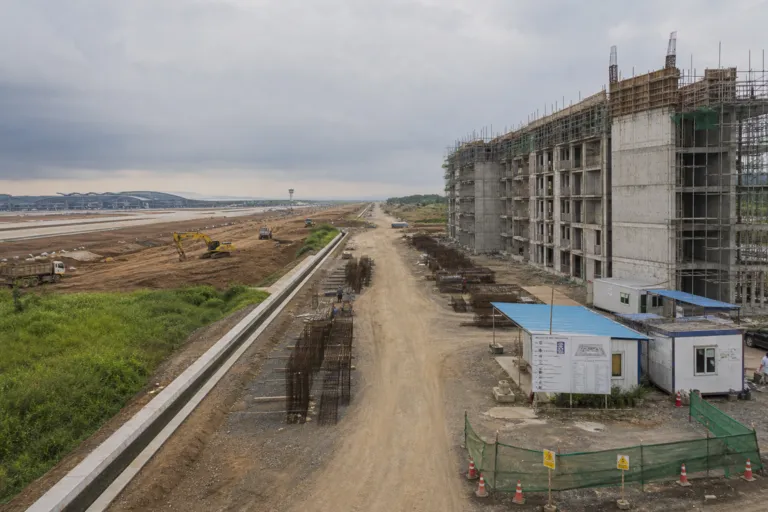
Indonesia’s new capital city, Nusantara (IKN), is moving from blueprint to construction, but the real story is whether private capital can match the ambition. INTRIC Research describes a US$34 billion plan on Borneo’s East Kalimantan coast, combining government and private investment, yet progressing more slowly than its architects envisioned. As of mid-2026, Nusantara had 47 apartment towers in progress, with 12 completed, and a US$261 million international airport under construction. It also had about 10,000 residents, described as predominantly construction workers, alongside the first cohort of 20,000 civil servants relocated from Jakarta by end-2024, with a further 4,100 planned for 2026. The infrastructure is visible. The market-making challenge is building the daily-life ecosystem that turns a government campus into a functioning city.
That ecosystem gap sits at the center of the investor question. INTRIC Research points to the missing private sector backbone—schools, retail, healthcare, and entertainment—that would anchor sustained demand beyond state-linked facilities. Asia Property Awards similarly notes that the relocation has not yet meaningfully shifted private real estate dynamics, adding that outside state-linked facilities and select hospitality projects, large-scale office and retail absorption has yet to materialise, and commercial development remains limited. For investors tracking Indonesia Nusantara capital investment, this is the key tension: construction milestones can be counted, but the speed at which private services and occupiers arrive determines whether property and infrastructure pipelines become self-reinforcing.
Financing Shifts Put Private Capital in the Spotlight
Financing conditions are tightening at the same time expectations are being reset. INTRIC Research reports that state funding allocated to Nusantara for 2026 was cut in half compared to 2025, describing it as a development that changes the timeline. Krungsri Research Intelligence also flags financing challenges, saying private investment remains far below target and that the fiscal burden on the government has risen beyond the level initially planned. It adds that a crisis of investor confidence emerged in mid-2026, weakening the investment climate and making it harder to attract funding for large-scale projects. Taken together, these signals imply a more gradual path, where credibility and bankable project structures matter as much as construction progress.
Policy is being used to bridge the gap. PressReader reports that the government has introduced incentives including tax holidays and tax deductions of up to 30 years for investments of at least 10 billion rupiah. At the same time, officials are highlighting early traction. International Investment reports that the new capital had attracted an estimated 72.39 trillion rupiah in investment by May 2026. By July, it says 67 private businesses had signed cooperation agreements with the Nusantara Capital Authority, with nine private projects completed and six under construction, including apartment and mixed-use developments. Separately, AMANTRA notes that in February 2026, the U.S. Government, through the U.S. Trade and Development Agency, provided a US$2.49 million grant for technical assistance supporting Nusantara’s Smart City Blueprint—an example of targeted support tied to specific capability building.
Even with these commitments, Indonesia may operate with two different centers of gravity for some time. Asia Property Awards reports that investment flows and industrial absorption remain centred on Greater Jakarta, framing corridors backed by policy as drawing industrial occupiers and investors seeking cost advantages without sacrificing infrastructure depth. Krungsri suggests IKN’s future hinges on closing the financing gap while rebuilding investor confidence, and that it could still succeed as Indonesia’s “Political Capital,” even if it falls short of becoming the “National Capital” envisioned under the original plan. The near-term test, then, is not whether cranes are on site, but whether private capital follows through with the services, tenants, and urban activity that convert construction into a durable market.
What is the current scale of construction progress in Nusantara as of mid-2026?
How is Indonesia encouraging private investors to fund Nusantara?
How much investment had Nusantara attracted by May 2026?
What is the outlook for Indonesia Nusantara capital investment given recent confidence concerns?
Is Jakarta still attracting investment despite the capital relocation?