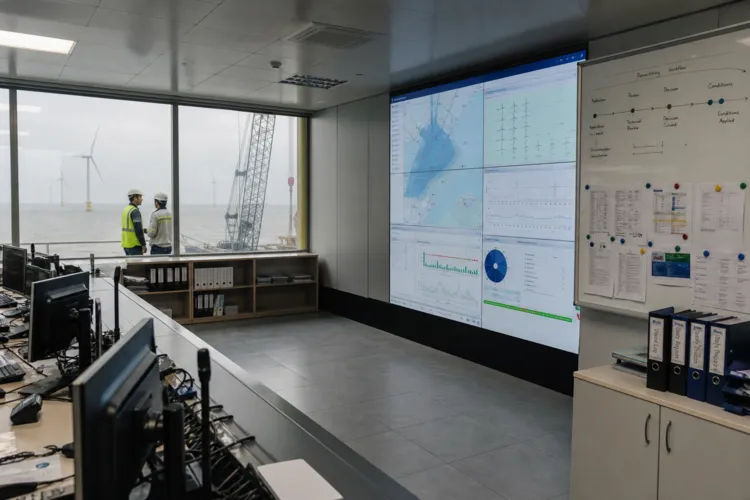
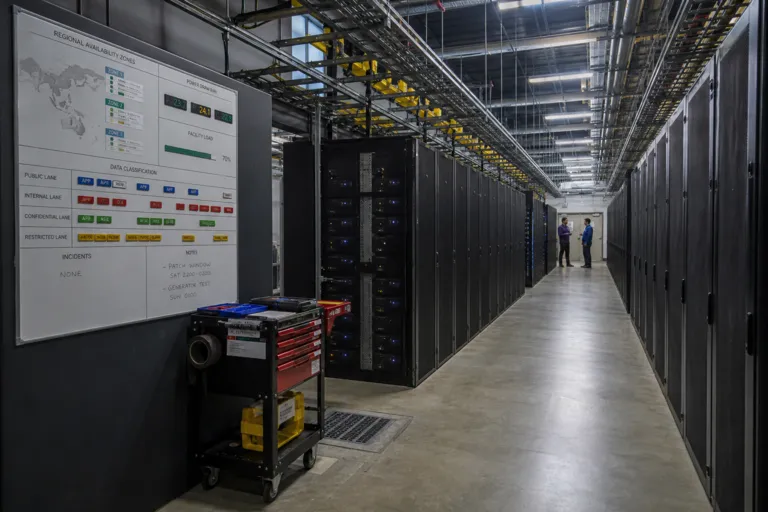
Across Southeast Asia, a new policy and infrastructure contest is taking shape: nations want AI systems they can govern, host, and align with local languages and laws. Five ASEAN countries—Singapore, Vietnam, Indonesia, Malaysia, and Thailand—are working to achieve “AI sovereignty,” pairing model-building with cloud and data center investments. Regional coordination is also moving, including the ASEAN Responsible AI Roadmap and the Expanded ASEAN Guide on AI Governance, both emphasizing localized ethics and data privacy. Framed as “digital decolonization,” the push reflects concerns that models trained mostly on Western data can miss linguistic nuance in Bahasa Indonesia, Thai, or Vietnamese, and that local context should be treated as first-class data.
Vietnam has put law at the center of its approach. Its first independent AI Law is effective March 2026, and it establishes a “National AI Infrastructure” that prioritizes Vietnamese language data so AI understands local context better than foreign models. The OECD notes Vietnam’s approach is inspired by the EU AI Act and uses risk-based classification, while placing stronger emphasis on national sovereignty considerations, data autonomy, and infrastructure. It also tasks the Prime Minister with reviewing Viet Nam’s AI Strategy at least every three years or upon significant market or technological developments. In Indonesia, the Ministry of Communication and Digital Affairs is tightening regulations on global platforms such as Google and Meta, framing digital data as the “primary raw material” that should benefit local creators through new intellectual property protections.
Compute Sovereignty: Data Centers, Power Limits, and the Johor Spillover
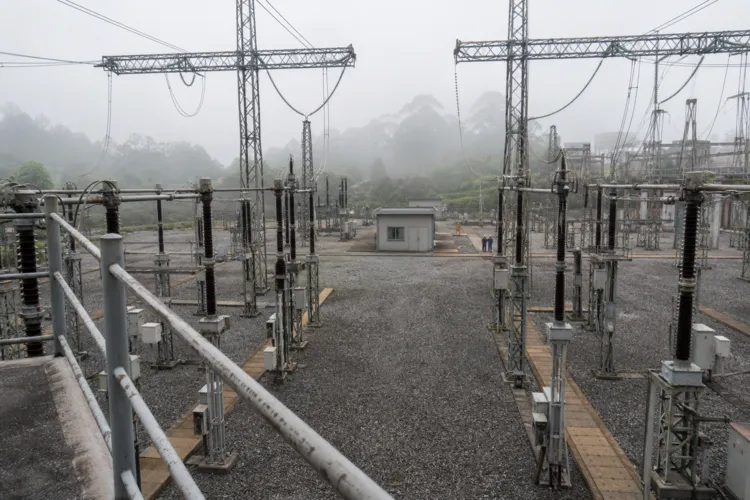
Compute is becoming the hard edge of national AI ambitions. Singapore still hosts more than 70 data center facilities and roughly 1.4 gigawatts of capacity, yet its Energy Market Authority effectively caps data centers at around 12% of national grid load. After a moratorium imposed in 2019 and only partially relaxed in 2022, Singapore has leaned into governance and efficiency. In December 2025, it opened a second Call for Applications for at least 200 megawatts, requiring half the power to come from green sources, and it is anchoring a 700-megawatt low-carbon park on Jurong Island. Those constraints pushed demand outward, helping turn the Johor-Singapore-Batam digital triangle into one of the world’s fastest-growing data center hubs.
Malaysia is positioning itself as a major beneficiary of the spillover. JLL projects Malaysian capacity will more than double to 2,055 megawatts by the end of 2026, a roughly 70% compound annual growth rate, with another 3,500 megawatts in the pipeline beyond that. Policy is moving alongside buildout. Malaysia’s National AI Office mandates that sensitive government data remains on local soil, and the country’s 2026 budget allocated approximately $490 million (MYR 2.1 billion) for a sovereign AI cloud aimed at keeping data and model training within national borders. At the regional level, Turner & Townsend (2026) says data centre investment in Southeast Asia could reach $30 billion by 2030, while the U.S.-ASEAN Business Council expects demand to grow at 20% annually through 2028.
Thailand is also accelerating, tying infrastructure to national policy. At the 2026 World Economic Forum, it secured over THB 500 billion in investment pledges to support its “Go Cloud First” approach, and its Board of Investment reported more than 1 trillion baht (US$30.7 billion) in investment applications in the first quarter of 2026, with the digital sector accounting for some 874 billion baht. These national races can produce momentum, but they also highlight fragmentation: separate grids, separate aquifers, and inter-nation rivalry. For businesses, that can mean uneven cloud platform availability, varied AI model access, and different regulatory requirements across markets. Still, the emerging ASEAN sovereign AI strategy is clear in direction: combine local rules, local data controls, and local compute so the region can host AI on its own terms.
What does an ASEAN sovereign AI strategy aim to achieve?
Which ASEAN countries are highlighted as pursuing AI sovereignty?
What are Singapore’s key data center constraints and targets mentioned?
What figures show Malaysia’s data center and sovereign cloud push?
What policy steps are cited for Vietnam and Indonesia on data and governance?