Palm oil sits at the center of the EU Deforestation Regulation (EUDR), and the deadlines are forcing a practical change in how supply chains are managed. Global palm oil production has more than doubled since 2005 and exceeded 78 million metric tons in 2024, increasing scrutiny on where expansion happens and how it is verified. In Indonesia alone, palm oil plantations claimed about 30,000 hectares of forest in 2023, a fact that raises the stakes for any exporter targeting the EU. Under the EUDR, products placed on the EU market must not be linked to deforestation or forest degradation, and companies must be able to prove it with precise location data.
The regulation draws a hard line with its deforestation cut-off date of December 31, 2020. That means palm oil cannot be sold in EU markets if it comes from land cleared after that date, and the proof burden is operational, not rhetorical. The updated EUDR timeline gives companies more time, but not fewer core requirements. Large and medium operators must comply from December 30, 2026, while small enterprises have until June 30, 2027. The regulation also raises financial risk: non-compliant businesses could face fines up to 4% of their EU earnings, which makes traceability an access condition, not a branding choice.
Why ASEAN Supply Chains Feel the Pressure First
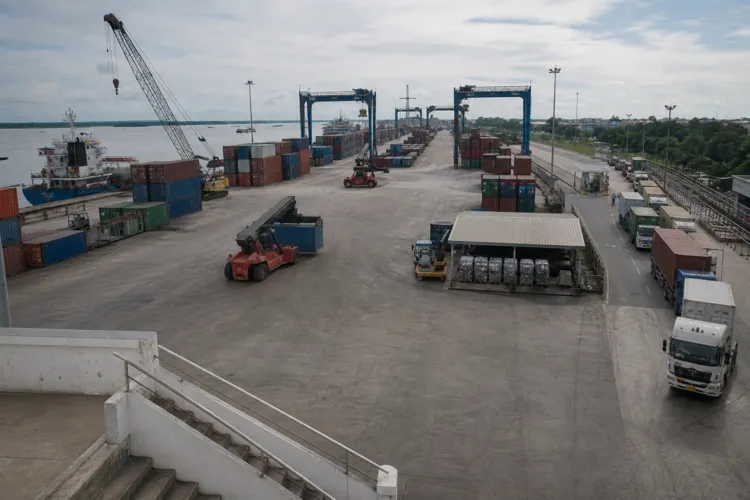
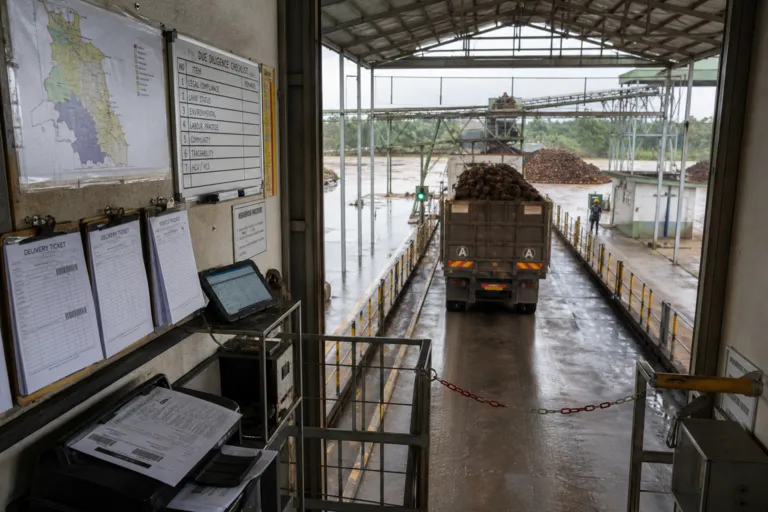
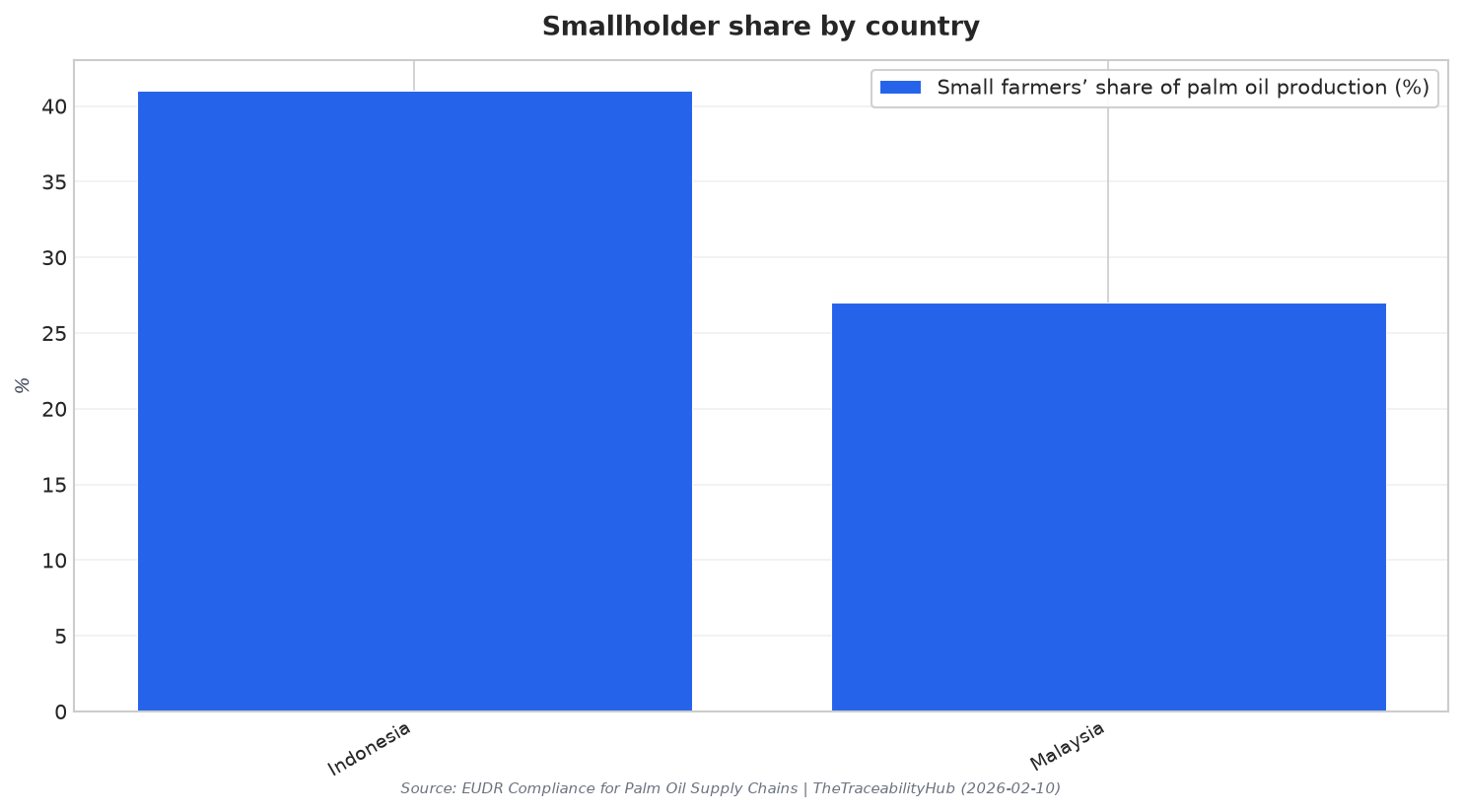
The compliance push hits ASEAN-connected supply chains because production and exports are highly concentrated in the region. Indonesia and Malaysia make up over 80% of global palm oil production and handle about 90% of worldwide palm oil exports, reaching 38 million metric tons in 2021/22. But the hardest part of compliance is not the export terminal. It is the farm plot. Small farmers produce around 41% of Indonesia’s palm oil and 27% of Malaysia’s, and they often sell through intermediaries. Those intermediaries can aggregate Fresh Fruit Bunches (FFB) from many smallholders, creating traceability gaps right where EUDR wants polygon-level geolocation.
Many companies already work inside national and voluntary schemes that can support parts of compliance. National schemes such as Indonesian Sustainable Palm Oil (ISPO) and Malaysian Sustainable Palm Oil (MSPO), complemented by voluntary systems like RSPO, can help demonstrate legal production status and practices that predate the EU cut-off date. But sources stress that these schemes are not a substitute for EUDR compliance through official channels. Exporters are reported to be losing EU market access not because they oppose the rule “in spirit,” but because geolocation data is incomplete, FFB agent records are informal, and due diligence statement (DDS) filings lack verifiable evidence.
That is why the path to ASEAN palm oil EUDR compliance is increasingly digital and workflow-driven. The updated regulation still requires precise geolocation data and due diligence statements, and recent amendments clarified that only the business that first places a product on the EU market must submit the formal due diligence statement. Micro and small primary operators may submit a one-off simplified declaration, reducing repeated paperwork, while keeping the central requirements intact. In practice, exporters and mills are being pushed toward structured onboarding, farm mapping, risk screening, traceability management, and DDS preparation, because “miss one data point” can mean a rejected submission and delayed access.
When do EUDR compliance deadlines apply to palm oil companies selling into the EU?
What is the EUDR deforestation cut-off date for palm oil sold in the EU?
Why are smallholders a major hurdle for palm oil traceability?
Do certifications like ISPO, MSPO, and RSPO replace EUDR requirements?
What does ASEAN palm oil EUDR compliance require in practice?